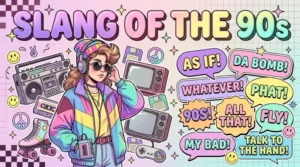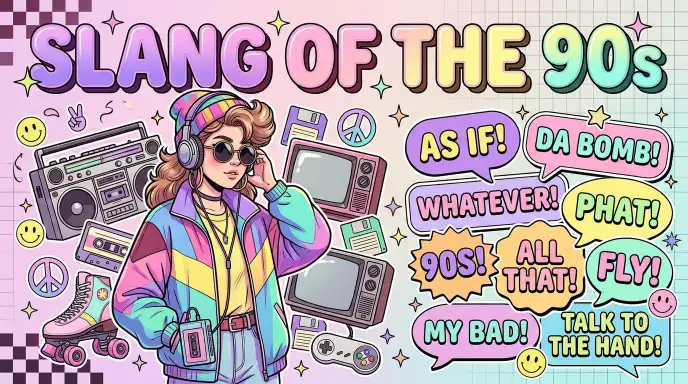
Slang of the 90s refers to the popular words and phrases, like “as if,” “whatever,” and “da bomb,” that defined how teens and young adults talked during the 1990s.
The decade produced some of the most memorable slang in modern history. Much of it came from hip-hop, television sitcoms, teen movies, and mall culture. Many of these words are now back in style thanks to nostalgia on social media.
Some 90s slang was playful and sarcastic, while other terms showed approval or excitement. Words like “phat,” “tight,” and “all that” were used to say something was cool or impressive. Others, like “talk to the hand,” were used to shut down a conversation.
People still search for 90s slang to understand old movies, plan theme parties, or relive their teenage years. Younger generations are also picking up these terms and mixing them with modern Gen Z language. That is why the slang of the 90s remains one of the most searched retro topics.
In this guide, we list the most popular 90s slang words, explain what each one means, and show how people used them. You will also find easy examples and answers to common questions.
Quick Answer:
Slang of the 90s refers to informal words and phrases popular during the 1990s. These expressions were commonly used by teenagers and young adults to show excitement, approval, attitude, friendship, or humor.
What Does Slang of the 90s Mean?
The slang of the 90s includes informal expressions that became popular in everyday conversations during the 1990s. People used these words with friends, at school, at parties, and in popular culture.
Unlike formal English, slang often changes with trends and generations. The 1990s had its own language influenced by hip-hop, R&B, skateboarding, grunge, television, and youth fashion.
For example:
- Phat: Excellent, attractive, or impressive.
- All that: Someone or something considered impressive.
- As if: A sarcastic way to reject an idea.
- Whatever: An expression of indifference or dismissal.
- Talk to the hand: A way of refusing to listen.
Some expressions started before the 1990s but became especially recognizable during the decade. Others grew through music, films, and television.
25 Popular Slang Words of the 90s and Their Meanings:
Here are some memorable expressions from the decade, along with simple explanations and examples.
1. Phat
Phat meant excellent, impressive, stylish, or attractive. It was especially associated with hip-hop culture.
Example: “That is a phat pair of sneakers!”
2. All That
This phrase described someone or something considered very impressive, attractive, or important.
Example: “She thinks she’s all that.”
3. As If
Popularized by the movie Clueless, this expression showed disbelief or sarcastic rejection.
Example: “You think I’ll do your homework? As if!”
4. Whatever
Whatever expressed indifference, disagreement, or a lack of interest.
Example: “You don’t like my outfit? Whatever!”
5. Talk to the Hand
This phrase meant that someone did not want to listen to another person’s complaints or opinions.
Example: “I don’t want another excuse. Talk to the hand!”
6. Da Bomb
Da bomb meant something was excellent, exciting, or extremely impressive.
Example: “That new song is da bomb!”
7. Fly
Fly described someone or something stylish, fashionable, or attractive.
Example: “Those shoes are fly!”
8. Fresh
Fresh meant cool, fashionable, or impressive. It was commonly heard in hip-hop and street culture.
Example: “Your new jacket looks fresh.”
9. Word
Word was a way to show agreement, approval, or understanding.
Example:
Person A: “That party was amazing.”
Person B: “Word!”
10. My Bad
My bad meant “my mistake” or “I’m sorry.” People used it to accept responsibility for a small error.
Example: “My bad! I forgot to call you.”
11. Booyah
Booyah expressed excitement, victory, or celebration.
Example: “We won the championship! Booyah!”
12. Homey
Homey referred to a close friend or someone from the same neighborhood or social circle. It is also spelled homie.
Example: “What’s up, homie?”
13. Scrub
A scrub was someone viewed as unsuccessful, unimpressive, or not worth dating. The expression became widely recognizable through TLC’s 1999 song “No Scrubs.”
Example: “She doesn’t want to date that scrub.”
14. All Up in My Grill
This expression meant someone was getting too close or invading another person’s personal space.
Example: “Stop getting all up in my grill!”
15. Psych!
Psych! was used after a statement to reveal that it was a joke or trick.
Example: “I’m giving you my new phone. Psych!”
16. Whateverrr
This playful version of whatever added extra attitude or sarcasm. People often stretched the word to show that they were annoyed or uninterested.
Example: “You think your team is better? Whateverrr!”
17. Booyah!
This expression was also used as a loud celebration after winning a game or achieving something exciting.
Example: “I finally passed the test. Booyah!”
18. Tight
Tight meant excellent, impressive, or enjoyable.
Example: “That concert was tight!”
19. Chill Out
Chill out meant relax, calm down, or stop getting upset.
Example: “Chill out! It was only a joke.”
20. Get Real
Get real was used to tell someone to be realistic or stop believing something unreasonable.
Example: “You think we’ll finish this project in five minutes? Get real!”
21. No Duh
No duh was a sarcastic way to say that something was obvious.
Example: “The test was difficult.”
“Well, no duh!”
22. Later
Later was a casual way to say goodbye. It was also used in expressions such as “Catch you later.”
Example: “I’m heading home. Later!”
23. Take a Chill Pill
This expression meant that someone should relax or stop overreacting.
Example: “Take a chill pill. Everything is going to be fine.”
24. Whatever Floats Your Boat
This phrase meant that someone was free to enjoy or choose whatever they liked.
Example: “You want to wear those bright green shoes? Whatever floats your boat!”
25. Talk About It
In casual conversation, people used this expression to emphasize a topic or react to something worth discussing. Its meaning depended on context.
Example: “That was the best game of the season. Talk about an exciting finish!”
Where Was 90s Slang Commonly Used?
The expressions of the 1990s spread through several parts of everyday life. Music, television, movies, and youth communities helped make certain phrases recognizable across different places.
1. Hip-Hop and R&B Culture
Hip-hop and R&B had a major influence on popular language during the decade. Words such as phat, fresh, fly, and homie became familiar through songs, artists, and music culture.
2. Movies and Television
Teen movies and sitcoms introduced many expressions to wider audiences.
For example, the 1995 movie Clueless helped popularize expressions such as “as if.” Television shows also made casual slang part of everyday conversations.
3. Schools and Friend Groups
Teenagers often used slang to communicate with friends, joke around, and express their personalities.
Expressions such as my bad, whatever, and no duh were easy to use in casual conversations.
4. Gaming and Online Communities
Video games and early internet communities also influenced informal communication. Players used short expressions to celebrate victories, tease friends, or react to surprising moments.
Real-Life Examples of 90s Slang in Conversations:
Here are examples showing how people might have used popular expressions in different situations.
| Situation | Conversation | Meaning |
| Friendly | “What’s up, homie?” | Greeting a close friend |
| Casual | “My bad, I forgot your book.” | Admitting a mistake |
| Excited | “That concert was da bomb!” | Saying something was excellent |
| Sarcastic | “You finished all your homework? As if!” | Showing disbelief |
| Argumentative | “Talk to the hand!” | Refusing to listen |
| Gaming | “Booyah! We won!” | Celebrating victory |
| Fashion | “Those shoes are fresh.” | Complimenting someone’s style |
More Examples from Everyday Life
At school:
Person A: “Did you finish the assignment?”
Person B: “My bad! I completely forgot.”
With friends:
Person A: “Let’s go to the mall.”
Person B: “Word! I’m ready.”
During an argument:
Person A: “You never listen to me.”
Person B: “Whatever! I’m done talking.”
After winning a game:
Person A: “We finally beat the other team!”
Person B: “Booyah! That was awesome!”
Why Did 90s Slang Become So Popular?
The 1990s were full of cultural changes, and informal language helped people express their identities and connect with others.
Several factors helped these expressions spread.
- Music: Hip-hop, R&B, pop, and alternative music introduced new words to listeners.
- Movies: Popular films made certain expressions memorable.
- Television: Sitcoms and teen shows brought casual language into homes.
- Fashion: Clothing and street culture influenced how young people communicated.
- Friendship: Slang helped groups develop shared expressions and inside jokes.
- Youth identity: Teenagers used informal language to express independence and personality.
The popularity of a phrase often depended on its cultural influence. Some expressions became widely recognized, while others stayed within particular communities.
Slang of the 90s vs. Slang of the 80s and 2000s:
Every decade has its own popular expressions. Comparing them helps explain how informal English changes over time.
Comparison Table 1: Slang Across Three Decades
| Decade | Popular Slang | Meaning |
| 1980s | Gnarly | Excellent, extreme, or impressive |
| 1980s | Rad | Cool or exciting |
| 1990s | Phat | Excellent or stylish |
| 1990s | Da bomb | Extremely good |
| 2000s | Bling | Flashy jewelry or expensive style |
| 2000s | Crunk | Exciting, energetic, or wild |
These expressions reflect different cultural trends, although some words crossed decade boundaries.
Comparison Table 2: 90s Slang vs. Modern Slang
| 90s Slang | Modern Expression | Similar Meaning |
| Phat | Fire | Excellent or impressive |
| Da bomb | Lit | Exciting or amazing |
| Fresh | Drip | Stylish or fashionable |
| My bad | My fault | Accepting a mistake |
| Word | Facts | Agreement |
| Chill out | Relax | Calm down |
The meanings are not always identical, but the comparisons show how different generations express similar ideas.
Is 90s Slang Rude or Offensive?
Most 90s slang expressions are casual rather than offensive. Words such as fresh, phat, word, and my bad are generally harmless in friendly conversations.
However, some phrases can sound dismissive or disrespectful depending on the situation.
For example:
- Talk to the hand: Can sound rude because it dismisses another person.
- Scrub: Can insult someone by suggesting they are unsuccessful or undesirable.
- Whatever: May sound disrespectful during a serious discussion.
- No duh: Can make someone feel foolish for asking a question.
Always consider your audience and tone. A phrase that sounds funny between close friends may feel insulting in a professional setting.
When Should You Avoid Using 90s Slang?
Although these expressions can make conversations entertaining, they do not fit every situation.
Avoid using outdated or overly casual slang when:
- Writing professional emails or business documents.
- Speaking in formal meetings.
- Applying for a job or attending an interview.
- Communicating with people who may misunderstand the expression.
- Discussing a serious or sensitive subject.
You can still use familiar expressions such as my bad with friends or colleagues in relaxed situations. The important thing is to match your language to the conversation.
Are 90s Slang Words Still Used Today?
Yes. Some expressions from the 1990s remain part of modern English.
Words such as my bad, chill out, whatever, and homie are still recognizable in many casual conversations.
Other phrases, including talk to the hand and da bomb, may sound dated or nostalgic. People sometimes use them today as jokes or references to 1990s culture.
Social media has also helped older slang return through throwback videos, fashion trends, music clips, and nostalgic content.
FAQs:
1. What was the most popular slang word in the 90s?
There was no single slang word used by everyone. Expressions such as phat, da bomb, whatever, fresh, and as if became widely recognizable during the decade.
2. What did phat mean in the 90s?
Phat was an informal way to describe something excellent, attractive, or impressive. It was especially associated with hip-hop culture.
3. What did da bomb mean in the 90s?
Da bomb meant something was extremely good, exciting, or impressive. For example, “That party was da bomb!”
4. What did teenagers say in the 90s?
Teenagers used expressions such as as if, whatever, my bad, no duh, fresh, and talk to the hand. Popular phrases varied by location and social group.
5. Is 90s slang still popular today?
Some expressions remain common, while others are mostly used for humor or nostalgia. Words like my bad and chill out are still familiar today.
6. What is the difference between 80s and 90s slang?
1980s slang included expressions such as rad and gnarly, while recognizable 1990s phrases included phat, da bomb, and as if. Some expressions were used across multiple decades.
Conclusion:
The slang of the 90s reflects a decade shaped by music, movies, television, fashion, and youth culture. Expressions such as phat, da bomb, fresh, my bad, and as if helped people communicate with humor, confidence, and personality.
Some of these phrases remain part of everyday English, while others bring back memories of a different generation. Learning their meanings makes it easier to understand 1990s movies, songs, and conversations.
The best way to understand any slang expression is to consider its context, tone, and audience. Even decades later, 90s slang remains a fun part of English language and pop culture.
Explore more!

Hi, I’m Jack Anderson, a writer at Slang Prime. I love exploring slang words, their meanings, and origins. My goal is to explain modern slang in simple language and help readers understand everyday expressions.