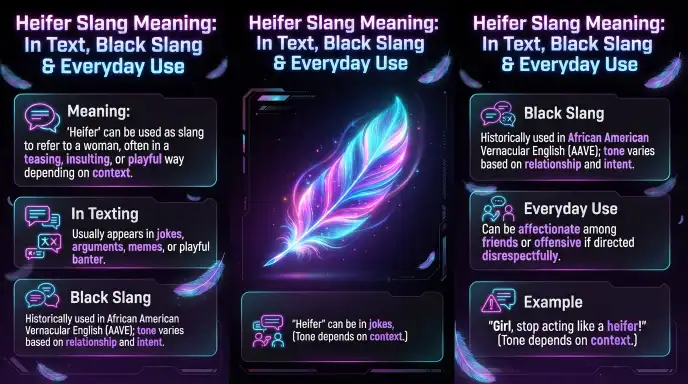
“Heifer” slang meaning refers to a term often used to describe a woman in a playful, sassy, or sometimes insulting way:especially common in Black slang, text messages, and everyday conversations.
The heifer slang meaning has its roots in farming, where a heifer is a young female cow that hasn’t given birth yet. Over time, this word transformed into modern slang, becoming especially popular within Black slang and African American Vernacular English (AAVE).
In today’s everyday use, heifer slang meaning is commonly linked to describing a woman in a teasing, sassy, or occasionally insulting manner. Whether it’s playful banter among friends or a sharper remark, the heifer meaning in text changes based on tone and context.
On social media platforms like Instagram, TikTok, and Twitter, heifer slang frequently shows up in memes, captions, and comment sections. Many users use “heifer” in text conversations and group chats as a fun, sassy way to address friends.
Since heifer is deeply tied to Black slang and Black culture, understanding its everyday use requires paying attention to relationship dynamics and tone. The same word can be affectionate among close friends or offensive when used with unfamiliar people.
Learning slang terms like heifer meaning in text helps readers stay current with internet trends and casual online communication. Knowing when and how to use heifer slang appropriately can prevent misunderstandings while keeping conversations fun and authentic.
Quick Answer
Heifer is a slang word that usually refers to someone:most often a woman:in either a joking or insulting way. Depending on the context, it can be playful between friends or considered rude and disrespectful.
What Does Heifer Mean in Text?
The heifer meaning slang changes depending on how it is used.
Originally, a heifer is a young female cow that has not yet had a calf. However, in texting and online conversations, the word has taken on a completely different meaning.
People may use “heifer” to:
- Tease a close friend in a funny way
- Playfully call someone stubborn or dramatic
- Insult someone by comparing them to a cow
- Express surprise in a humorous conversation
Because tone cannot always be understood in text messages, the same word may sound friendly in one conversation and offensive in another.
For example:
- “Girl, you wild, heifer!” (playful)
- “Move out of the way, heifer.” (offensive)
The relationship between the speakers usually determines how the word is interpreted.
Heifer Full Form or Definition
Unlike internet abbreviations, heifer is not an acronym, so it does not have a full form.
Instead, it is simply an English word that later became slang.
Dictionary Meaning
A heifer is:
A young female cow before giving birth to her first calf.
Slang Meaning
In modern slang, “heifer” refers to a person in either a humorous or insulting way.
It may describe someone who is:
- Silly
- Dramatic
- Annoying
- Stubborn
- higher-weight person (used as an insult)
Because some meanings target a person’s appearance, many people consider the slang offensive.
Is Heifer Rude, Offensive, or Neutral?
The answer depends entirely on the situation.
Friendly Use
Among very close friends, especially in playful conversations, the word may not be intended as an insult.
Example:
“You forgot my birthday, heifer!”
Here both people understand it is a joke.
Offensive Use
When used toward someone who is not a close friend, “heifer” often becomes insulting.
It may imply that someone is:
- Fat
- Lazy
- Unattractive
- Mean
In these situations, the word can easily hurt someone’s feelings.
Neutral Use
The word remains completely neutral when referring to an actual young female cow.
Where Is Heifer Commonly Used?
The slang appears in many informal places.
Common platforms include:
- Text messages
- TikTok comments
- Instagram captions
- Facebook posts
- Snapchat chats
- X (formerly Twitter)
- YouTube comments
- Meme pages
- Group chats
It is rarely appropriate in:
- Business emails
- School assignments
- Professional meetings
- Customer communication
Real-Life Examples of Heifer Usage
Friendly Example
“Come over here, heifer. We haven’t talked all week.”
Casual Example
“That heifer ate all the pizza again!”
Argument Example
“Don’t call me a heifer.”
Social Media Example
“You funny, heifer 😂”
Gaming Example
“Heifer, revive me before the enemy gets here!”
These examples show that context completely changes the meaning.
Origin and Background of the Slang
The word “heifer” has existed for hundreds of years in agriculture.
Farmers traditionally used it to describe a young female cow before her first calf.
Over time, people began comparing human behavior to animals as a form of humor or insult.
Eventually, “heifer” became part of informal slang, especially in American English.
Its popularity increased through:
- Comedy shows
- Movies
- Television
- Internet memes
- Social media
- Everyday conversations
Today, many younger users know it only as slang rather than its farming meaning.
Comparison with Similar Slang
Many slang words carry similar meanings but differ in tone.
| Slang Word | Meaning | Tone | Offensive Level | Common Usage |
| Heifer | Playful or insulting nickname | Casual | Medium to High | Friends, arguments |
| Cow | Direct insult about appearance | Harsh | High | Arguments |
| Chick | Informal word for a woman | Casual | Low | Everyday speech |
| Bestie | Close friend | Friendly | None | Social media |
polite alternatives to Heifer
If you want to joke with someone without sounding rude, consider these alternatives
- Friend
- Bestie
- Buddy
- Sis
- Girl
- Pal
- Teammate
- Mate
These words are much less likely to offend someone.
Impact of Using Slang in Communication
Slang makes conversations feel more relaxed and personal.
Benefits include:
- Creates friendly conversations
- Builds group identity
- Makes messages more entertaining
- Adds humor
However, slang also has disadvantages.
It can:
- Cause misunderstandings
- Sound disrespectful
- Offend people from different backgrounds
- Create communication problems at work
Choosing the right words for the right audience is always important.
Comparison with Other Animal-Based Slang
| Word | Typical Meaning | Can Be Offensive? |
| Heifer | Playful or insulting | Yes |
| Fox | Attractive person | Usually no |
| Snake | Dishonest person | Yes |
| Goat | Greatest of all time | No |
When Should You Avoid Using Heifer
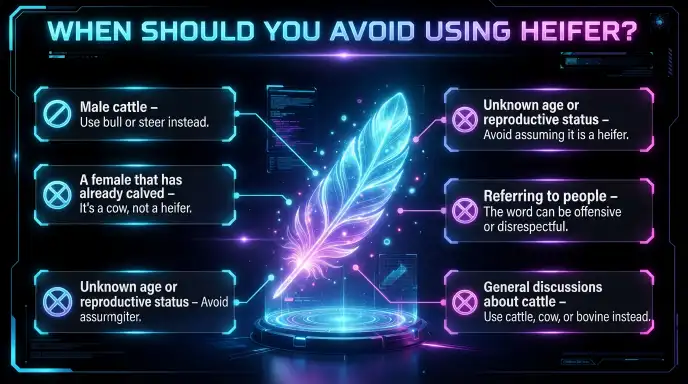
There are several situations where using this slang is not recommended.
Avoid it:
- During professional conversations
- With strangers
- In customer service
- During formal presentations
- In academic writing
- Around people who may misunderstand your intention
Since tone is difficult to recognize in text messages, using “heifer” may create unnecessary conflict.
Comparison Between Literal and Slang Meaning
| Feature | Literal Meaning | Slang Meaning |
| Refers To | Young female cow | Person |
| Purpose | Agriculture | Informal conversation |
| Tone | Neutral | Friendly or offensive |
| Context | Farming | Texting and social media |
Why Do People Use This Slang?
There are several reasons why people continue using the word.
Some use it to:
- Sound funny
- Tease close friends
- Express frustration
- Add personality to conversations
- Follow internet trends
- Copy expressions heard in movies or social media
Although many people intend no harm, others may still find it disrespectfu
Comparison of Positive vs Negative Usage
| Situation | Meaning | Safe to Use? |
| Close friends joking | Playful | Usually yes |
| Family humor | Depends on relationship | Sometimes |
| Stranger | Offensive | No |
| Workplace | Unprofessional | No |
Is Heifer Safe for Social Media?
Generally, yes:but only when used carefully.
Before posting it, consider:
- Who will read it?
- Could someone misunderstand it?
- Does it violate community guidelines?
- Is it directed at someone personally?
If the answer raises concern, it is better to choose a friendlier word.
Remember that online posts remain visible for a long time, and humor does not always translate well across different audiences.
Examples in Different Contexts
Friendly Conversation
Sarah: Where have you been?
Emma: Busy all week.
Sarah: You forgot to text me, heifer!
Casual Conversation
“I can’t believe that heifer finished the entire dessert.”
Argumentative Conversation
“You’ve been rude all day.”
“Stop calling me a heifer.”
Gaming Chat
“Heifer, heal me before we lose this match!”
Social Media Caption
“Missing this wild heifer already ❤️”
Family Conversation
“My sister called me a heifer, but we were only joking.”
FAQs
What does it mean if you call someone a heifer?
Calling someone a “heifer” is slang for referring to a woman, often in a sassy, teasing, or mildly insulting way :similar to calling someone “girl” or “chick,” but with more attitude.
What does heffa mean in Black slang?
“Heffa” is a phonetic spelling of “heifer” used in African American Vernacular English (AAVE). It means the same thing : a term for a woman that can be playful among friends or sharp when used as an insult, depending on tone.
What does “not today heifer” mean?
It’s a sassy comeback meaning “not today, girl” : used to shut down someone’s attitude, drama, or excuses. It became a popular meme phrase for telling someone their nonsense won’t be tolerated right now.
What is a Heifa slang?
“Heifa” is just another spelling variation of “heifer”/”heffa,” commonly used in captions, texts, and social media. It carries the same core meaning : slang for a woman.
Is heifer an insult?
Heifer can be an insult if used harshly or toward someone unfamiliar, but among friends it’s often used playfully without any negative intent.
Where does the heifer slang come from?
The term originally comes from farming language, referring to a young female cow, and later became popular in Black slang and AAVE (African American Vernacular English).
Is heifer only used in Black culture?
While heifer slang is strongly associated with Black culture and AAVE, it has also spread into mainstream slang through social media and everyday internet use.
Conclusion
Understanding the heifer meaning slang helps you recognize the difference between its original definition and its modern use in everyday conversations. While the word originally refers to a young female cow, it has evolved into a slang expression that can be either playful or insulting depending on context, tone, and the relationship between the people involved.
Before using this slang, think carefully about your audience. What feels like harmless humor to one person may sound disrespectful to another. In professional, educational, or formal situations, it is usually best to choose polite alternatives. By understanding how and when the term is used, you can communicate more clearly, avoid misunderstandings, and use language that fits the conversation.
Read more about!

I am Ann Raimes, an applied linguist and English language educator. I am widely recognized for my contributions to writing pedagogy and research in ESL writing. I have authored several well-known books, including Techniques in Teaching Writing, Keys for Writers, and How English Works: A Grammar Handbook with Readings. Throughout my career, I have worked to promote communicative writing and the process-based approach to teaching writing, helping both teachers and learners develop effective writing skills.