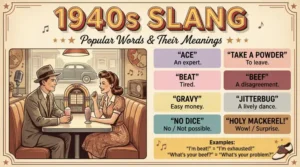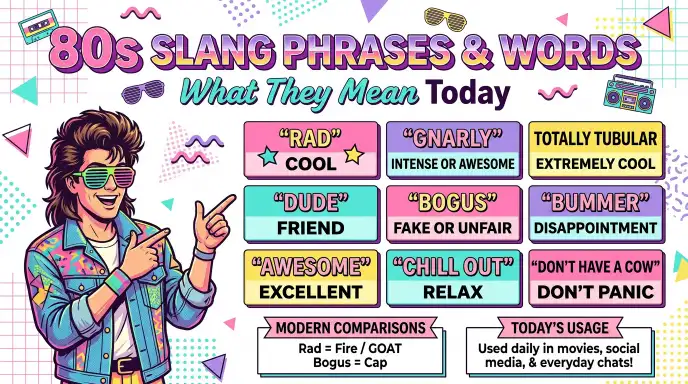
80s slang phrases are popular words and expressions from the 1980s, such as “rad,” “gnarly,” “tubular,” and “totally,” that came from surf, skate, and pop culture.
The decade gave English some of its most colorful and memorable slang. Many of these words came from California surfers, skaters, and the “Valley girl” way of speaking. Movies, music, and TV shows then spread them across the world.
Some phrases were used to show approval, like “radical” or “bodacious,” while others described bad situations, such as “bogus” or “gag me with a spoon.” For example, “That mixtape is totally rad” is a classic way to praise something. As a result, 80s slang is still easy to recognize in films and retro-themed posts.
Today, many of these words appear again in memes, themed parties, and nostalgic social media posts. Some have faded away, while others, like “dude” and “chill,” are still in daily use. Knowing the original meaning helps you enjoy the style without sounding out of place.
In this guide, you will learn the most popular 80s slang phrases, what each one means, and how people used them back then. You will also find examples, similar retro terms, and answers to frequently asked questions to help you use them with confidence.
Quick Answer:
80s slang phrases are informal expressions popular during the 1980s. Words such as “rad,” “awesome,” and “totally tubular” described exciting, impressive, or enjoyable things.
What Are 80s Slang Phrases?
Definition of 80s Slang
80s slang refers to informal words and expressions that people commonly used during the 1980s. These phrases appeared in everyday conversations, television shows, music, teen movies, and youth culture.
Unlike formal English, slang often communicates feelings quickly. A single word can express excitement, approval, frustration, or surprise without requiring a long explanation.
For example, someone might say, “That concert was totally rad!” instead of “That concert was excellent.”
Although these expressions became associated with the 1980s, not every phrase originated during that decade. Some existed earlier and became more widely recognized during the 1980s, while others developed through youth culture, skateboarding, surfing, and popular entertainment.
Why Were These Expressions Popular?
Several cultural influences helped spread 1980s slang:
- Movies and television: Teen comedies and popular characters introduced memorable expressions.
- Music: Rock, pop, hip-hop, and other musical movements influenced everyday language.
- Skateboarding and surfing: These communities helped popularize words such as “gnarly.”
- Fashion and youth culture: Teenagers used slang to express identity and belonging.
- Friendship and social life: Informal expressions made conversations more relaxed and entertaining.
These influences helped turn certain expressions into recognizable symbols of the decade.
The Difference Between 80s Slang and Modern Slang:
How Expressions Have Changed
Slang changes as technology, entertainment, and social habits change. Expressions that sounded modern in the 1980s may sound nostalgic or humorous today.
For example, people once used “rad” to describe something impressive. In contemporary online conversations, someone might instead say “fire,” “lit,” or “goated,” depending on the intended meaning.
The expressions are not always exact equivalents. Modern slang can carry different cultural associations and may change meaning between online communities.
| 80s slang | Modern alternative | Main similarity |
| Rad | Fire | Something impressive |
| Awesome | Amazing | Strong approval |
| Bogus | That’s not fair | Disapproval or criticism |
| Bummer | That’s disappointing | Expressing disappointment |
| Gnarly | wild | Describing something intense |
| Dude | Bro | Informal way to address someone |
| Chill out | Calm down | Asking someone to relax |
| Psych! | Just kidding | Revealing a joke or trick |
Are 80s Expressions Still Used Today?
Yes. Some expressions remain common, while others appear mainly in nostalgic conversations, retro entertainment, costumes, themed parties, and online jokes.
Words such as “awesome,” “dude,” and “chill out” remain widely recognizable. Phrases such as “totally tubular” may sound more deliberately retro.
People often reuse older expressions because they enjoy the humor, personality, and cultural references associated with them.
How to Use 80s Slang Phrases in Everyday Conversations:
Friendly and Casual Examples
Classic slang works particularly well in relaxed conversations with friends who understand the intended meaning.
Here are several examples:
- “Dude, your new haircut looks awesome!”
- “That arcade game is totally rad.”
- “Let’s chill out and watch a movie.”
- “Fer sure, I’ll meet you after school.”
- “That was a gnarly skateboard trick!”
These examples communicate enthusiasm without sounding formal.
Funny and Playful Examples
Some expressions work best when used humorously.
- “Gag me with a spoon! That vegetable looks terrible.”
- “You think you’re all that and a bag of chips.”
- “I finished all my homework early. Psych! I haven’t started.”
- “Don’t have a cow; I only borrowed your jacket.”
- “That outfit is so retro, it’s totally tubular.”
The humor often comes from using an exaggerated expression in an ordinary situation.
Argumentative Examples
Not all 80s slang is friendly. Some expressions can sound dismissive, sarcastic, or confrontational.
- “That’s a bogus excuse.”
- “What’s your damage?”
- “Bite me.”
- “No duh, I already told you.”
- “Get a life and stop bothering me.”
Use these carefully. A phrase that sounds funny among close friends may offend someone who interprets it as a serious insult.
Gaming and Social Media Examples
You can also use classic expressions in online chats, gaming conversations, captions, and retro-themed posts.
For example:
- “That boss fight was gnarly!”
- “Your gaming setup is rad.”
- “GG, dude. That was totally awesome.”
- “This retro playlist is bodacious.”
- “That old arcade game is still wicked.”
These expressions can add personality to posts about vintage games, 1980s movies, old-school music, and nostalgic trends.
Where Is 80s Slang Commonly Used?
Movies, Music, and Television
Movies and television helped popularize many expressions associated with the decade. Teen comedies, coming-of-age stories, and action films often used informal language to establish a character’s personality.
Music also played an important role. Different musical scenes developed their own expressions, accents, and styles of speaking.
When you watch an older movie, you may notice that characters use slang differently from people in modern films. Understanding these expressions makes dialogue easier to follow.
Everyday Conversations and Online Communities
Today, people commonly use 80s slang in:
- Retro-themed parties and events.
- Social media captions and nostalgic posts.
- Conversations about vintage fashion.
- Discussions of classic movies and music.
- Comedy sketches and parody videos.
- Gaming communities that celebrate retro culture.
- Creative writing featuring 1980s characters.
These expressions can help create a recognizable atmosphere without requiring lengthy descriptions of the decade.
Regional Differences in Slang
Not everyone in the 1980s spoke the same way. Language varied across the United States and other English-speaking regions.
For example, “hella” is strongly associated with Northern California and the broader Bay Area, although its use has spread. Surfing communities helped popularize expressions such as “gnarly,” while other phrases became famous through movies and television.
It is important to avoid treating every expression as universal. A phrase might be familiar to one group but unfamiliar to another.
The Origin and Cultural Background of 80s Slang:
How Pop Culture Shaped Language
The 1980s were a period of major changes in entertainment, fashion, music, and technology. Music videos, cable television, home video, and popular teen films helped expressions travel between communities.
Young people often adopted words that reflected their interests and social identities. Surfers and skateboarders used language connected to their activities, while movies introduced exaggerated versions of youth speech to larger audiences.
Some expressions, such as “awesome,” existed long before the 1980s. Others gained wider recognition during the decade rather than originating then.
This distinction matters because slang rarely appears at a single moment. Words develop over time as people borrow, reshape, and popularize them.
Why Nostalgia Keeps These Words Alive
Nostalgia helps older expressions remain recognizable. When people revisit classic films, listen to old music, or recreate vintage fashion, they also encounter the language associated with those experiences.
Writers and content creators use these phrases to establish a period, create humor, or make dialogue sound more authentic.
However, using too many expressions in one conversation can sound unnatural. A few carefully chosen phrases usually create a stronger effect than filling every sentence with retro slang.
Which 80s Slang Phrases Are Rude or Offensive?
Understanding Tone and Context
Most classic expressions are harmless, but some can sound insulting or disrespectful.
| Phrase | Tone | Potential problem |
| Rad | Positive | Generally harmless |
| Awesome | Positive | Suitable for most casual settings |
| Bummer | Disappointed | Usually harmless |
| Bogus | Critical | Can sound accusatory |
| No duh | Sarcastic | May make someone feel foolish |
| What’s your damage? | Confrontational | Can sound insulting |
| Bite me | Rude or defiant | May escalate an argument |
| Get a life | Dismissive | Can hurt someone’s feelings |
| Gag me with a spoon | Disgusted or exaggerated | Can sound dramatic or disrespectful |
When Should You Avoid These Expressions?
Avoid rude or overly casual slang when communicating with someone who expects professional language.
For example, a workplace email should generally say, “I disagree with this decision” rather than “That’s bogus.”
Similarly, “Could you please calm down?” sounds more respectful than “Take a chill pill” in a serious disagreement.
The best choice depends on your relationship with the listener, the setting, and the tone of the conversation.
Why Do People Still Enjoy 80s Slang?
Personality, Humor, and Nostalgia
People continue to enjoy these expressions because they have distinctive sounds and strong cultural associations.
There are several reasons for their continued appeal:
- Nostalgia: They remind people of a particular decade.
- Humor: Exaggerated phrases can make ordinary situations funny.
- Creativity: They offer alternatives to everyday vocabulary.
- Cultural interest: They help younger audiences explore older entertainment.
- Character development: Writers can use them to make dialogue feel period-specific.
- Social connection: Shared expressions can create a sense of belonging.
These benefits explain why retro language remains popular in entertainment and online conversations.
Can You Use Them Without Sounding Outdated?
Absolutely. The key is to use them naturally.
For instance, saying “That game was rad” once during a conversation sounds playful. Repeating “rad,” “bodacious,” and “totally tubular” in every sentence may sound like a parody of an old movie.
Choose expressions that match your personality and the situation. Slang works best when it communicates a real feeling rather than serving as decoration.
FAQs :
Q1: What are some 80s sayings?
Classic 80s sayings include “gag me with a spoon,” “totally tubular,” “as if,” “talk to the hand,” “take a chill pill,” and “don’t have a cow.” Many came from surf, skate, and Valley girl speech and then spread through movies, music, and TV. Each phrase shows surprise, approval, or annoyance in a playful way. Today they are popular in retro parties, memes, and nostalgic posts.
Q2: What was a popular slang word in the 1980s?
One of the most popular words was “rad,” short for “radical,” which meant great or impressive. “Gnarly” and “bodacious” were also common, and “dude” became a daily greeting among teens. Others, like “bogus” for something bad or unfair, spread widely through teen movies. “Rad” and “dude” are especially well known because they are still used in some form today.
Q3: What are 80s slang words for cool?
The most common 80s words for cool were “rad,” “tubular,” “gnarly,” “wicked,” “bodacious,” and “fresh.” “Righteous” and “awesome” were also used to praise something impressive. Many of these began in surfing and skating circles before moving into everyday teen talk. Which word people chose often depended on the region and the group, so there was no single official term.
Q4: What do people in the 80s say?
People in the 1980s mixed casual teen slang with everyday phrases, depending on their age and place. Teens often said “totally,” “like,” “no way,” and “whatever,” while pop culture added lines such as “where’s the beef?” from a famous fast-food ad. Adults used the slang less, and it spread mainly through TV, music, and school hallways. As a result, the “80s sound” most people remember comes largely from movies and teen culture.
Q5: What are iconic 80s things?
Iconic 80s things include cassette tapes, the Walkman, arcade games, MTV, neon clothes, big hair, and the first home video game systems. Movies like Back to the Future and The Breakfast Club also shaped the decade’s style. Many of these items and shows are still referenced today, which helps explain why 80s slang feels so recognizable. Fashion, music, and technology all contributed to the era’s unique look and sound.
Q6: How do people in the 80s talk?
Teens in the 80s often spoke in a fast, casual style filled with slang, exaggeration, and pop culture references. Valley girl speech added “like,” “totally,” and “as if,” while surfers and skaters added “dude,” “gnarly,” and “rad.” Adults and older speakers usually used plainer language, so the style varied by age and region. Movies made the teen version more famous than it may have been in daily life.
Conclusion:
80s slang phrases offer a fascinating look at the language, entertainment, and youth culture of the 1980s. Expressions such as “rad,” “gnarly,” “totally tubular,” and “don’t have a cow” help capture the decade’s distinctive style.
Some phrases remain common in modern English, while others are mainly used for humor, nostalgia, and retro-themed content. Their meanings can also vary depending on regional background and conversational tone.
If you want to use these expressions naturally, start with familiar words such as “awesome,” “dude,” and “chill out.” Save more exaggerated phrases for playful conversations, creative writing, or situations where the listener understands the reference.
Ultimately, learning classic slang is about more than memorizing words. It helps you understand cultural history, recognize informal English, and appreciate how language continues to evolve.
Discover More!

Hi, I’m Jack Anderson, a writer at Slang Prime. I love exploring slang words, their meanings, and origins. My goal is to explain modern slang in simple language and help readers understand everyday expressions.