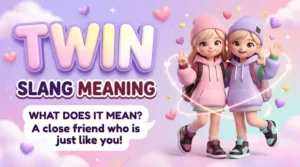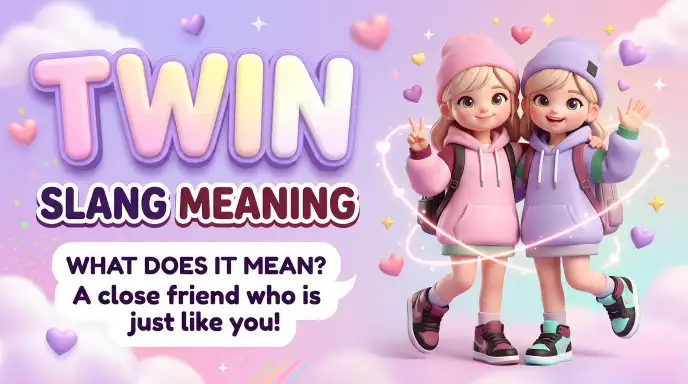
Twin is a slang word for a very close friend, someone you trust and relate to so much that they feel like your other half, and it is often used as a friendly nickname in texts and on social media.
The twin meaning in slang has nothing to do with being born at the same time. Gen Z users call a best friend “twin” when they share the same humor, style, or way of thinking, so the word works like “bestie” or “ride or die.”
In text and on TikTok, you will see it in messages like “yes twin” or “thanks twin.” People also use it to start a friendly reply or to show agreement, and it can be used for both girls and guys.
Twin can also point to similar tastes or matching looks, as in “we are twins” when two friends wear the same outfit. In some online circles, especially among young men, it is used as a casual way to say “bro” or “my guy.”
Tone and context matter, since the same word can mean a literal sibling in normal chat. This guide explains what twin means in slang, how to use it in a sentence, and how it differs from words like bestie and bro. You will also find simple chat examples so you can use it the right way.
Quick Answer:
In slang, “twin” usually means a close friend, someone you relate to, or a person who seems similar to you. It is an informal, generally friendly term used in texts, social media, and everyday conversations.
What Does Twin Mean in Slang?
In modern slang, twin is a casual way to address someone you feel connected to. It can mean a best friend, a close buddy, or someone who shares your personality, opinions, style, or experiences.
The expression comes from the idea of twins having a special connection or looking alike. In slang, people extend that idea to friendships and similarities that have nothing to do with being biologically related.
For example:
- “That’s my twin!” means “That’s my close friend” or “We are so alike.”
- “What’s good, twin?” means “What’s up, friend?”
- “You understand me, twin” means “You get me because we relate to each other.”
- “Twin, we need to talk” is a casual way to address someone familiar.
The word can describe an actual close friendship, but it can also be playful. Someone might call a person “twin” simply because they have matching outfits, similar opinions, or the same sense of humor.
What Does Twin Mean in Text Messages?
When someone uses “twin” in a text, the meaning usually depends on the conversation.
1. A close friend
Someone may call a friend “twin” to show affection or familiarity.
Example:
- Person A: “I’m coming over after school.”
- Person B: “Bet, twin!”
Here, “twin” works like “friend” or “buddy.”
2. Someone who thinks like you
People also use the term when someone shares their opinions or understands their feelings.
Example:
- Person A: “I would rather stay home and watch movies.”
- Person B: “Twin, same! Going out is too much today.”
Both people have the same preference, so the word highlights their connection.
3. Someone with a similar style
If two people dress alike, enjoy the same music, or have similar personalities, they may jokingly call each other twins.
Example: “We bought the same shoes without planning it. You’re literally my twin!”
4. A friendly way to start a message
Sometimes, “twin” is simply a casual form of address. The sender may use it like “bro,” “bestie,” or “fam,” without suggesting that the two people are identical.
Example: “Twin, did you finish the assignment?”
What Is the Full Form of Twin Slang?
Unlike abbreviations such as LOL or BRB, twin is not generally an acronym and has no standard full form in slang.
It is an ordinary English word that has developed an informal meaning in modern conversation. Its slang use is based on the idea of similarity, closeness, and connection.
When someone asks, “What does twin stand for?” the simplest answer is that it usually stands for friendship or a feeling of being alike—not a set of initials.
| Word or expression | Meaning | Example |
| Twin | Close friend or someone similar to you | “That’s my twin.” |
| Bestie | Best friend | “Hey, bestie!” |
| Bro | Friend or familiar person | “What’s up, bro?” |
| Fam | Friend or chosen family | “Thanks, fam.” |
These words overlap, but they are not always interchangeable. “Twin” often emphasizes similarity or a special connection, while “bestie” specifically suggests a close friendship.
Is Twin Slang Friendly, Rude, or Offensive?
The slang term “twin” is generally friendly, positive, and informal. People commonly use it to express affection, agreement, familiarity, or a sense of belonging.
It is not normally considered a rude or offensive word.
However, context matters. A person may not appreciate being called “twin” by a stranger, especially in a serious conversation or professional setting. Some people also prefer not to use slang when communicating with people they do not know well.
Consider these examples:
- Friendly: “Love you, twin. Thanks for always being there.”
- Playful: “Twin, why are we always thinking the same thing?”
- Sarcastic: “Okay, twin, whatever you say.”
- Uncomfortable: Repeatedly calling someone “twin” after they ask you not to.
The word itself is usually harmless, but tone and personal boundaries can change how it feels.
Where Is Twin Slang Commonly Used?
Twin slang appears in different forms of digital communication and everyday conversation.
Text messages and group chats
Friends may use “twin” as a nickname or greeting. It can make a conversation feel relaxed and personal.
Example: “Twin, send me the pictures from yesterday.”
TikTok and Instagram
People may comment “my twin” when they relate to a video, agree with a creator, or recognize a similar personality or experience.
Example: “You explained exactly how I feel. My twin!”
Snapchat
The word may appear in messages between friends who use casual nicknames.
Example: “Good morning, twin!”
Gaming communities
Players may use “twin” to address a teammate or someone who shares their strategy, reactions, or gaming preferences.
Example: “Twin, we had the same plan and still lost!”
Everyday conversations
The expression is not limited to the internet. Friends may say it aloud when greeting each other or noticing something they have in common.
Its popularity and exact meaning vary across communities. Not everyone uses the term, and it should not be treated as universal slang.
Real-Life Examples of Twin Slang:
Here are examples showing how people might use “twin” in different situations.
| Situation | Example sentence | Intended meaning |
| Friendly | “You’re my twin for real.” | We are close or very similar. |
| Casual | “What’s up, twin?” | What’s up, friend? |
| Agreement | “Twin, I was thinking the same thing.” | We share the same opinion. |
| Fashion | “We wore matching outfits. My twin!” | We have a similar style. |
| Gaming | “Twin, cover the left side!” | A casual way to address a teammate. |
| Social media | “This video is so relatable, twin.” | I relate to this experience. |
| Argumentative | “Twin, that isn’t what I said.” | A familiar but possibly frustrated way to address someone. |
| Supportive | “You got this, twin!” | Encouragement for a friend. |
Friendly example
A: “I finally passed my driving test!”
B: “Let’s go, twin! I knew you could do it.”
Here, “twin” adds warmth and excitement to the message.
Casual example
A: “Are you coming to the game tonight?”
B: “Of course, twin. I’ll be there.”
The word simply creates a relaxed, familiar tone.
Argumentative example
A: “You keep changing the plan.”
B: “Twin, I’m just trying to make it work.”
The word remains informal, but the conversation may feel tense because of the disagreement.
Gaming or social media example
Player A: “We both chose the same character.”
Player B: “Twin behavior!”
This playful phrase points out that the two players made the same choice.
Twin vs. Twin Flame vs. Bestie vs. Bro:
Although these expressions can all describe connections between people, they have different meanings.
| Term | Main meaning | Typical use |
| Twin | A close friend or someone similar to you | Casual chats and social media |
| Twin flame | A spiritual or romantic concept describing a deep connection | Relationships and spirituality |
| Bestie | A very close friend | Friendship and personal messages |
| Bro | A friend or familiar person | Casual conversation |
| Soulmate | Someone with whom you feel a deep connection | Romantic or close emotional relationships |
| Fam | A friend or person who feels like family | Friendly conversations and online communities |
Important distinction: “Twin” does not automatically mean “twin flame.” Twin flame is a separate concept, often associated with a supposedly profound spiritual or romantic connection. Calling someone “twin” in a text usually has a much more casual meaning.
Where Did Twin Slang Come From?
The slang use of “twin” builds on the word’s traditional meaning: one of two children born during the same pregnancy, or one of two closely matching things.
Over time, people began using twin-like language figuratively to describe people who look alike, think alike, or share a close bond. Calling a friend “my twin” is a natural extension of that comparison.
Modern online communication has helped make the expression visible through comments, short videos, memes, and group chats. The term also fits the way internet slang often turns familiar words into quick, expressive ways of showing identity and connection.
There is no single confirmed origin date for the modern slang use, and its popularity differs across communities. It is more accurate to describe it as an evolving informal expression than to claim that one person or platform invented it.
Why Do People Use Twin Slang?
People use “twin” because it communicates connection in just one word.
Common reasons include:
- Showing friendship: It can make a friend feel appreciated.
- Expressing agreement: It highlights when two people think alike.
- Creating a playful nickname: Friends may use it instead of a name.
- Building a sense of belonging: Shared slang can make a group feel connected.
- Keeping messages short: It fits naturally into texts and social media comments.
- Expressing relatability: People use it when someone describes an experience they have also had.
The expression can also add humor to ordinary situations. For example, two friends who order the same food might joke that they are twins.
When Should You Avoid Using Twin Slang?
Although “twin” is generally harmless, it may not fit every situation.
Consider avoiding it when:
- Writing professionally: Use the person’s name or an appropriate greeting in work emails.
- Speaking to strangers: A familiar nickname may feel too personal.
- Having a serious conversation: Clear, direct language may be better.
- Talking to someone who dislikes slang: Respect their preferred way of communicating.
- Communicating across generations or cultures: The recipient may not understand the intended meaning.
If you want a more neutral alternative, use “friend,” “buddy,” “colleague,” or the person’s name. The best choice depends on your relationship and the situation.
Is Twin Slang Safe to Use on Social Media?
Yes, “twin” is generally suitable for ordinary social media posts, comments, captions, and private messages. It is not inherently explicit, abusive, or inappropriate.
For example:
- “My twin understands me.”
- “Twin energy!”
- “That’s my twin right there.”
- “We have the same taste in music, twin.”
Still, always consider the context. A joke that works among close friends may sound confusing to strangers. Avoid assuming that someone is comfortable with a nickname simply because it is popular online.
FAQs:
1. What does twin mean when a girl calls you twin?
It usually means she sees you as a friend, feels comfortable with you, or thinks you have something in common. It does not automatically mean she has romantic feelings for you.
2. What does twin mean when a guy texts it?
A guy may use “twin” as a friendly nickname, greeting, or way to show that he relates to you. The exact meaning depends on your relationship and the conversation.
3. Does twin mean best friend?
Sometimes. It can refer to a best friend, but it may also describe a casual friend or someone with similar interests or opinions.
4. Is twin slang the same as twin flame?
No. “Twin” is usually a casual term for a friend or similar person. “Twin flame” is a separate spiritual or romantic concept associated with a deep connection.
5. What does “that’s my twin” mean?
It usually means “that’s my close friend” or “that person is just like me.” The phrase can refer to shared interests, matching styles, or similar personalities.
6. What does twin stand for in texting?
It has no standard acronym or full form. In texting, it is an informal word used to address a friend or someone the sender feels connected to.
Conclusion:
The answer to what does twin mean slang is simple: it usually refers to a close friend, someone who understands you, or a person who shares your personality, interests, or opinions. People commonly use it in text messages, group chats, gaming conversations, and social media comments.
The word is generally friendly and informal, not offensive. However, it does not always mean best friend, and it does not automatically suggest romantic interest or a twin-flame connection.
If someone calls you “twin,” look at the surrounding message and your relationship with that person to understand the intended meaning. Used naturally, it is a simple way to express familiarity, friendship, and a feeling of being alike.
Deep dive!
Deep dive!

Hi, I’m Jack Anderson, a writer at Slang Prime. I love exploring slang words, their meanings, and origins. My goal is to explain modern slang in simple language and help readers understand everyday expressions.