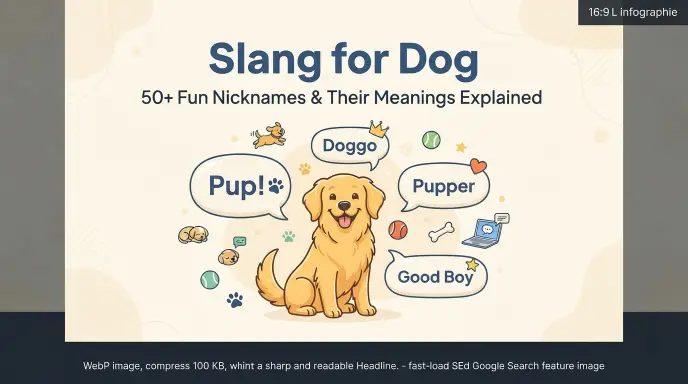
Popular slang for dog includes words like “pupper,” “doggo,” “pooch,” “mutt,” and “furball” : all affectionate or informal terms used to refer to dogs in everyday conversation and on social media.
Dogs have earned dozens of playful nicknames over the years, from classic terms like “pooch” to internet-born favorites like “doggo” and “pupper.” Each word carries its own tone, from cute and casual to humorous and endearing.
Social media, especially platforms like Twitter and Instagram, has fueled a whole new wave of dog slang through viral meme culture. Terms like “doggo” and “good boi” originated from this online “DoggoLingo” trend and quickly became mainstream.
In this guide, we’ll explore the most popular slang terms for dogs, their origins, and how to use them correctly : whether you’re talking about your own pet or scrolling through cute dog videos online.
Quick Answer:
Common slang for dog includes doggo, pupper, pup, woofer, floof, good boy, good girl, and puppers. Most of these terms are playful, friendly, and commonly used by dog lovers and on social media.
What Does Slang for Dog Mean in Text?
When people use slang for dog in text messages, they are usually using a casual or humorous nickname instead of simply saying “dog.”
For example, someone might text:
“Look at this cute doggo!”
Here, doggo simply means dog. It adds a playful and affectionate feeling to the sentence.
Similarly:
“My pupper is sleeping on the sofa.”
In this sentence, pupper is a cute slang term for a dog.
These expressions are especially common among pet owners, animal lovers, and social-media users.
Common Slang Words for Dog
Some of the most popular terms include:
- Doggo – a playful word for dog
- Pupper – a cute term for a dog
- Pup – an informal term, often meaning puppy
- Woofer – a humorous internet nickname for a dog
- Floof – a fluffy or furry pet
- Good boy – an affectionate term for a male dog
- Good girl – an affectionate term for a female dog
- Pupperino – an exaggerated, playful version of pupper
- Fur baby – an affectionate way to describe a pet
- Canine – a more formal word for a dog
Dog Slang Full Form and Definition
There is no single slang for dog full form because these expressions are generally nicknames rather than acronyms.
For example, doggo does not have a hidden full form. It is simply a playful variation of the word “dog.”
Likewise, pupper is not an abbreviation. It is an informal and cute variation associated with “puppy” or “dog.”
What Does Doggo Stand For?
If someone asks, “What does doggo stand for?”, the simple answer is that doggo means dog in playful internet language.
It is commonly used in:
- Text messages
- Memes
- Social-media posts
- Pet communities
- Online forums
- Funny captions
The word usually creates a cute and lighthearted tone.
Is Slang for Dog Rude or Offensive?
Most slang terms for dogs are friendly, playful, and neutral when they are used for an actual animal.
Words such as doggo, pupper, pup, floof, and woofer are generally not offensive.
However, the word “dog” itself can sometimes be used as an insult when describing a person. The meaning changes depending on the context.
For example:
“My doggo is adorable.”
This is affectionate.
But:
“He is acting like a dog.”
This could be insulting depending on the situation.
Dog Slang and Tone
| Term | Usual Tone | Common Meaning |
| Doggo | Cute | Dog |
| Pupper | Playful | Dog or puppy |
| Pup | Friendly | Young dog |
| Floof | Humorous | Fluffy dog |
| Woofer | Funny | Dog |
| Fur baby | Affectionate | Beloved pet |
| Good boy | Loving | Male dog |
| Good girl | Loving | Female dog |
Where Is Dog Slang Commonly Used?
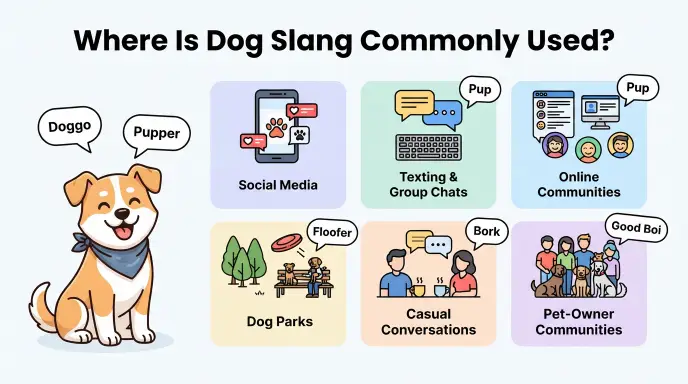
Dog slang is especially popular online because social media encourages short, expressive, and humorous language.
You may see these words on:
- TikTok
- YouTube
- Discord
- Group chats
- Pet forums
- Meme websites
People often use slang when posting pictures or videos of their pets.
For example:
“My doggo discovered the beach today!”
Or:
“This little floof refuses to get out of bed.”
These sentences feel more personal and playful than simply saying “my dog.”
Dog Slang in Social Media Captions
Dog slang works particularly well in captions because it creates an emotional connection.
Examples include:
- “Just a happy doggo.”
- “My little pupper is growing up!”
- “Look at this fluffy floof!”
- “Good boy deserves all the treats.”
- “Weekend adventures with my fur baby.”
Real-Life Examples of Slang for Dog
The best way to understand slang for dog is to see how people actually use these terms.
Friendly Example
“Your doggo is so cute!”
The speaker is using “doggo” as a friendly and affectionate replacement for “dog.”
Casual Example
“I need to take my pup for a walk.”
Here, “pup” is a casual term for a dog, particularly a young dog.
Cute Example
“Who is the best pupper in the whole world?”
This is playful language often used when talking to or about a pet.
Social Media Example
“This floof stole my blanket again 😂”
“Floof” usually emphasizes a dog’s fluffy appearance.
Gaming or Online Community Example
“That doggo in the background just made my day.”
This could appear in a gaming stream, video comment, Discord chat, or other online community.
Humorous Example
“The woofer has entered the kitchen.”
“Woofer” is a deliberately silly way to refer to a dog.
Argumentative Example
Dog slang can also appear in a negative conversation when the word “dog” is used about a person:
“Don’t call people names just because you’re angry.”
In this context, “dog” may be intended as an insult rather than an affectionate pet term.
Popular Slang Terms for Dog Compared
Not every slang term has exactly the same feeling. Some are more childish, while others are more humorous.
| Slang Term | Meaning | Best Used For |
| Doggo | Dog | General cute references |
| Pupper | Dog/puppy | Cute posts and conversations |
| Pup | Young dog or dog | Everyday conversation |
| Floof | Fluffy dog | Funny captions |
| Woofer | Dog | Humor and memes |
| Fur baby | Beloved pet | Affectionate conversations |
| Pupperino | Dog | Extra-playful internet language |
These terms can often be used interchangeably, but the emotional tone may be slightly different.
Doggo vs. Pupper vs. Pup
These three are among the most recognizable forms of dog slang.
Doggo
Doggo is a playful internet word for dog. It does not necessarily mean the dog is young.
Example:
“Our doggo loves going on road trips.”
Pupper
Pupper is another cute internet term. It often gives the impression of a small or young dog, although people may use it for dogs of any age.
Example:
“That pupper has the biggest smile!”
Pup
Pup is more established in everyday English. It commonly means a young dog or puppy, but people also use it casually for dogs in general.
Example:
“The pup is waiting by the door.”
| Feature | Doggo | Pupper | Pup |
| Style | Internet slang | Cute slang | Everyday informal |
| Usually means | Dog | Dog/puppy | Young dog/dog |
| Tone | Playful | Very cute | Casual |
| Social media use | High | High | Moderate |
| Formal use | No | No | Limited |
Origin and Background of Dog Slang
The popularity of modern dog slang is closely connected to internet culture.
As online communities grew, users began creating playful variations of everyday words. Pet owners especially developed humorous ways of describing animals.
Words such as doggo and pupper became popular because they sounded cute and intentionally informal.
The internet also helped spread phrases such as:
- “doggo”
- “pupper”
- “heckin doggo”
- “floof”
- “woofer”
- “boi”
- “good boy”
These expressions became part of online pet culture.
Why Internet Users Create New Dog Words
Internet slang often works by making ordinary words sound more emotional or humorous.
For example:
dog → doggo
puppy → pupper
fluffy dog → floof
The meaning remains understandable, but the emotional tone becomes more playful.
When Should You Avoid Dog Slang?
Dog slang is perfectly appropriate in casual situations, but it may not fit every audience.
Avoid using highly playful terms such as “doggo” or “pupper” when writing:
- Formal reports
- Academic assignments
- Professional documents
- Veterinary records
- Legal documents
- Business correspondence
For example, a veterinarian would normally write:
“The dog has a mild skin condition.”
rather than:
“The doggo has a little skin problem.”
The second sentence may be fine in casual conversation, but the first is more professional.
Choose Your Words Based on the Audience
A useful rule is:
Casual audience = slang is fine.
Professional audience = use standard language.
This keeps your communication clear and appropriate.
Polite Alternatives to Dog Slang
If you are unsure whether your audience understands internet slang, use standard alternatives.
Instead of:
- Doggo → dog
- Pupper → dog or puppy
- Floof → fluffy dog
- Woofer → dog
- Fur baby → pet
- Pupperino → dog or puppy
Standard words are especially useful when clarity matters more than humor.
Why Do People Use Slang for Dogs?
People use dog slang because it makes communication feel more expressive.
Calling a pet a doggo can sound warmer than simply saying “dog.”
For example:
“I saw a dog.”
is straightforward.
But:
“I saw the cutest little doggo!”
sounds more emotional and enthusiastic.
Dog slang can communicate:
- Affection
- Humor
- Excitement
- Playfulness
- Internet culture
- Emotional attachment
Slang Makes Pet Conversations More Personal
Pets are often treated as members of the family. Terms such as fur baby reflect this emotional relationship.
Similarly, words such as good boy and good girl show affection and praise.
Impact of Dog Slang in Communication
Using dog slang can make online communication more relaxed and entertaining.
A caption such as:
“My pupper is ready for adventure!”
feels playful and friendly.
However, slang can sometimes confuse people who are unfamiliar with internet culture.
For that reason, consider your audience before using less common expressions.
Benefits of Dog Slang
- Makes messages more playful
- Adds personality
- Works well in social media captions
- Creates a sense of community
- Shows affection toward pets
- Makes pet-related content more engaging
Possible Drawbacks
- May sound childish in formal writing
- Some people may not understand newer slang
- Certain expressions can have different meanings
- “Dog” can be offensive when directed at a person
Is Dog Slang Safe for Social Media?
Yes. Common expressions such as doggo, pupper, pup, floof, and fur baby are generally safe for social media.
They are commonly used in harmless pet-related posts and conversations.
For example:
“My doggo had the best day at the park!”
There is nothing inherently offensive about this sentence.
Still, remember that the word dog can have a negative meaning when directed at a person. Always consider the context and audience.
Best Dog Slang for Social Media
If you want a cute and recognizable term, these are strong choices:
- Doggo
- Pupper
- Pup
- Floof
- Fur baby
- Good boy
- Good girl
- Woofer
Best Slang for Dog Captions
If your goal is to create a fun social-media caption, dog slang can make the wording more memorable.
Here are some examples:
- “Living my best life with my doggo.”
- “This pupper owns the house.”
- “Just another day with my favorite floof.”
- “My good boy is ready for adventure.”
- “Life is better with a fur baby.”
- “Who needs an alarm when you have a pupper?”
- “Big paws, bigger personality.”
- “My little woofer is having a great day.”
The best term depends on your dog’s personality and the tone you want.
FAQs:
Q1: What does dog mean in Gen Z slang?
In Gen Z slang, “dog” is often used affectionately to mean a close friend, similar to “bro” or “dude” : as in “What’s up, dog?” It can also appear in phrases like “dogged” (meaning to be criticized, teased, or let down) or “you got dogged” (meaning someone acted disloyal or embarrassed you).
Q2: What is a cute way to say “dog”?
Cute, affectionate ways to say “dog” include “doggo,” “pupper,” “pooch,” “furbaby,” and “good boi” : terms that became popular through internet meme culture and are widely used on social media to describe dogs in an endearing, playful tone.
Q3: What are dogs in British slang?
In British slang, “dogs” can refer to a person’s feet (“my dogs are barking” means tired feet), while calling someone “a dog” can be a derogatory term for an unattractive person. Additionally, “dogging” in British slang has an entirely different, adult-context meaning related to public activity, so context is important when using these terms.
Q4: What is a nickname for a dog?
Common nicknames for a dog include “Fido,” “Rex,” “Buddy,” “Max,” and “Rover” for a generic pet name, while casual nicknames like “pup,” “mutt,” “hound,” and “furball” are used more broadly to affectionately refer to any dog regardless of breed or name.
Final Thoughts :
Understanding slang for dog is easy once you know the context. Words such as doggo, pupper, pup, floof, woofer, and fur baby are popular ways to make conversations about dogs sound more playful, affectionate, and personal.
Among these terms, doggo is one of the most widely recognized internet expressions, while pupper has an especially cute and humorous tone. Pup is more familiar in everyday English, and floof is a fun choice when you want to emphasize a dog’s fluffy appearance.
Most dog slang is friendly and safe for casual conversations and social media. However, standard words are usually better for professional writing.
Ultimately, the best slang for dog depends on your audience, purpose, and tone. Whether you call your pet a doggo, pupper, pup, or fur baby, these expressions show how language can make everyday communication more fun and expressive.
Useful Resources!

I am Ann Raimes, an applied linguist and English language educator. I am widely recognized for my contributions to writing pedagogy and research in ESL writing. I have authored several well-known books, including Techniques in Teaching Writing, Keys for Writers, and How English Works: A Grammar Handbook with Readings. Throughout my career, I have worked to promote communicative writing and the process-based approach to teaching writing, helping both teachers and learners develop effective writing skills.